
Faith & Scripture
October 2026
Christians, Why Are You Silent?
Standing Firm in God's Word When the World Challenges Our Faith
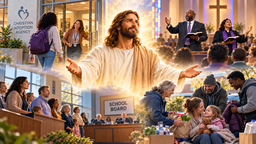
Christians, I have a question for you.
When did standing firm in God's Word become something we were afraid to do because someone might be offended?
When did we become more concerned about being accepted by the world than remaining faithful to the One who saved us?
We call ourselves followers of Jesus Christ. We attend church, sing praises, listen to sermons, and proclaim our faith.
But what happens when we walk outside those church doors?
Do we continue living according to God's Word, or do we remain silent when biblical truth becomes uncomfortable?
Jesus did not call us to be Christians only when it is convenient. He called us to follow Him, even when doing so is difficult.
Our faith should not disappear when we leave the church parking lot.
God Is the Creator of Life
Let's begin with something that should never be treated as insignificant: human life.
Genesis 1:27 teaches that God created mankind in His own image.
Jeremiah 1:5 (ESV) says:
“Before I formed you in the womb I knew you”
God spoke those words to Jeremiah, reminding him that his life and calling were known before his birth.
Psalm 139:13 (ESV) says:
“For you formed my inward parts; you knitted me together in my mother's womb.”
Isaiah 44:24 also describes the Lord as the One who formed us in the womb.
God is the Creator of life.
Science recognizes that even a single cell can be alive. Human embryology teaches that fertilization produces a zygote, a single living cell that begins the development of a new human organism.
Human life does not suddenly become biologically alive when a baby develops recognizable features or takes its first breath.
Scripture teaches us why human life is sacred: we are created in God's image.
And that brings us to a responsibility Christians should never ignore.
Proverbs 31:8–9 instructs us to speak for those who cannot speak for themselves and defend the rights of the vulnerable.
Who is more voiceless than an unborn child?
How can we preach about the sanctity of life while remaining silent when innocent lives are being destroyed?
How can we say every child is precious to God while allowing circumstances surrounding a child's conception to determine whether that life deserves protection?
A child does not choose the circumstances of conception, the family into which they are born, or the hardships they may face.
Yet none of those circumstances diminishes that child's value before God.
Every human life has value because God is the Creator of life.
Protecting and Teaching Our Children
God entrusted parents with the responsibility of raising, teaching, and protecting their children.
Deuteronomy 6:6–7 instructs God's people to teach His commandments diligently to their children.
That responsibility goes beyond reading Bible stories or taking our children to church.
We need to teach our children to look at others through what I like to call Jesus glasses.
To see people with compassion, kindness, patience, and love. To recognize that every person has value because they were created by God.
But teaching our children to love others does not mean teaching them to accept sin as normal simply because the world has decided it is acceptable.
There is a difference between loving someone and agreeing with everything they believe or do.
Jesus loved sinners, but He never taught that sin should be celebrated or ignored.
We need to teach our children the difference between God's Word and the words of the world.
The world will tell them many things about who they should be, what they should believe, and what they must accept to fit in.
But their foundation should not be built on what happens to be popular.
It should be built on the Word of God.
Romans 12:2 reminds us not to conform to the patterns of this world but to be transformed through the renewing of our minds.
And just as importantly, we need to teach our children to love how God made them.
Psalm 139:14 (ESV) says:
“I praise you, for I am fearfully and wonderfully made.”
Think about what that means.
God did not create our children by accident. He knew them before we ever held them in our arms.
He put thought and purpose into their creation. The color of their skin, their eyes, and their hair were no surprise to Him. Neither was whether they would be a boy or a girl.
God knew exactly who He was creating.
Our children need to know that they are not mistakes, that their lives have purpose, and that they do not have to change who they are simply because the world tells them they should.
Teach your children to love the skin God gave them, whether it is light or dark. Teach them to appreciate the color of their eyes, the texture of their hair, and the qualities that make them unique.
Teach your sons to value being boys and your daughters to value being girls. Teach them that their worth does not depend on fitting someone else's expectations.
They do not have to look like everyone else, think like everyone else, or follow the crowd to have value.
Being different does not make them less precious.
Teach your children to love themselves for who God created them to be. Do not let the world convince them that God's creation was a mistake.
And while we are teaching our children to love themselves and others, we must also teach them discernment.
Jesus warned us in Matthew 7:15 about false prophets who come disguised as sheep but are inwardly ravenous wolves.
Not everyone who speaks kindly has good intentions. Not everyone who claims to represent God is faithfully teaching His Word.
Our children need to understand the difference between a sheep and a wolf in sheep's clothing.
Teach them to recognize the difference between truth and deception, between someone who genuinely cares about them and someone who wants to lead them astray.
Teach them to examine what they hear against Scripture rather than accepting something simply because a popular person, a trusted adult, or even someone claiming to be a Christian says it.
And teach them that discernment is not the same as judging someone by their appearance, their differences, or their background. Jesus warned about false teaching and harmful intentions, not about distrusting people because they look different.
A wolf does not become a sheep simply because it learns to sound like one. That is why our children must know God's Word well enough to recognize the difference.
We should teach them that it is okay to stand apart from the crowd, even when doing so is difficult.
It is okay to be different from the world. It is okay to stand firm in God's Word when others disagree. And it is okay to love people without following them down a path that contradicts what God has taught us.
But we must also remember that children learn from what they see.
If we teach them to love their neighbors, they should see us treating people with kindness.
If we teach them to speak the truth, they should see us being honest.
If we teach them to stand firm in their faith, they should see us refusing to compromise our own.
And if we teach them that every person is created in God's image, they should never see us treating someone as though they are worthless.
Jesus gave a serious warning in Matthew 18:6 about causing little ones who believe in Him to stumble.
Our children need more than rules. They need biblical guidance, understanding, patience, protection, and examples worth following.
We cannot expect our children to develop the courage to stand firm in God's Word if we are unwilling to demonstrate that courage ourselves.
Do Not Turn a Blind Eye to Evil
What about the innocent people who suffer because others choose to do evil?
What about women and children who have been abused, raped, tortured, trafficked, or murdered?
What about children whose innocence has been stolen?
What about families who have been devastated by violence, addiction, and exploitation?
Are we so afraid of uncomfortable conversations that we would rather look away?
Ephesians 5:11 (ESV) tells us:
“Take no part in the unfruitful works of darkness, but instead expose them.”
God does not call us to pretend evil does not exist.
He does not instruct us to ignore suffering because confronting wrongdoing might offend someone.
And He does not teach us that showing compassion requires us to excuse those who deliberately harm others.
Proverbs 21:15 teaches that justice brings joy to the righteous.
Christians should be among those willing to protect the vulnerable, comfort those who are suffering, and speak against cruelty and exploitation.
We should also remember that evil does not always announce itself.
Sometimes it hides behind charm, convincing words, or even religious appearances.
That is why discernment matters.
Loving others does not mean accepting evil. Forgiveness does not mean pretending wrongdoing never happened. And being Christlike does not mean allowing innocent people to be harmed.
This Is a Spiritual Battle
Ephesians 6:11 (ESV) tells us:
“Put on the whole armor of God, that you may be able to stand against the schemes of the devil.”
Notice that God tells us to stand.
He does not tell us to abandon His Word because society considers biblical teachings unpopular.
He does not tell us to redefine sin to make people comfortable.
And He certainly does not tell us to accept false teachings simply because they sound appealing.
Ephesians 6:12 reminds us that our ultimate struggle is not against flesh and blood.
People are not our spiritual enemy.
We are called to love others, pray for them, and share the Gospel.
But loving people does not require us to compromise what God has said.
The devil does not need every Christian to openly reject God if he can persuade us to become indifferent, distracted, or afraid to speak the truth.
We must recognize deception, test what we hear against Scripture, and remain grounded in God's Word.
James 1:22 tells us to be doers of the Word, not hearers only.
Being a Christian does not mean being a doormat. Being Christlike does not mean compromising God's Word.
Faith requires more than knowing what the Bible says.
It requires the courage to live according to it.
Are We Following Christ or Seeking the World's Approval?
Jesus warned His followers that living according to His teachings would not always make them popular.
John 15:18 reminds us that the world hated Jesus before it hated His followers.
So why are we surprised when biblical teachings are challenged?
Why do we sometimes behave as though the world's approval is more important than God's truth?
Romans 12:2 (ESV) begins:
“Do not be conformed to this world, but be transformed by the renewal of your mind”
We are not called to reshape God's Word to fit whatever society currently accepts.
We are called to allow God's Word to transform us.
That means examining our own hearts, our choices, and the way we treat others.
It means recognizing that simply calling ourselves Christians does not automatically mean we are living as Christ taught.
Jesus warned about false prophets in Matthew 7:15, describing wolves disguised in sheep's clothing.
Not everyone who speaks about God faithfully represents Him.
And not everyone who quotes Scripture is teaching it correctly.
We need to know God's Word well enough to recognize when someone is twisting its meaning.
Our faith must be built on Jesus Christ, not on popularity, appearances, or the approval of others.
A Message to Ministers, Pastors, and Elders
Now I want to speak directly to those entrusted with leading God's people.
Are you teaching the whole Word of God, or only the parts that won't offend anyone?
Are you preparing your congregations to recognize false teaching, confront sin in their own lives, and stand firm when their faith is challenged?
You preach about righteousness.
You preach about protecting the innocent.
You preach about loving our neighbors.
You preach about spiritual warfare.
But are you preparing God's people to put those teachings into practice?
Acts 20:28 instructs church leaders to pay careful attention to themselves and to the flock entrusted to their care.
Ezekiel 33 describes the responsibility of a watchman who must warn people of approaching danger.
Although that passage was specifically addressed to Ezekiel, it provides a serious picture of the responsibility that comes with delivering God's warnings.
A shepherd is not called merely to make the sheep comfortable.
A shepherd is responsible for guiding, feeding, and protecting the flock.
That sometimes requires addressing subjects people would rather avoid.
If God's Word teaches that human life is sacred, teach it.
If God's Word commands us to protect the vulnerable, teach it.
If Scripture warns against deception, hypocrisy, and evil, teach it.
And if God's Word calls us to repent of our own sins, teach that too.
Second Timothy 4:2 calls for preaching the Word faithfully, with patience and instruction, whether the time is favorable or not.
The church should be a place where people encounter the truth of God's Word, even when that truth challenges them.
We do not need pastors who tell us only what we want to hear. We need pastors who faithfully teach what God has said.
Jesus Was Not Silent
Jesus confronted hypocrisy.
He exposed false teaching.
He challenged religious leaders who cared more about appearances than righteousness.
And He did not change God's truth to make Himself popular.
Remember what happened when Jesus entered the temple and found people turning His Father's house into a marketplace?
In John 2:13–17, Jesus drove out the merchants and money changers.
He did not quietly ignore what was happening.
He confronted it.
Jesus demonstrated that righteousness and love do not require silence in the face of wrongdoing.
Yet this same Jesus showed extraordinary compassion.
He cared for the rejected, healed the suffering, forgave sinners, and taught His followers to love their enemies.
His courage and compassion were never opposites.
He spoke the truth because He loved.
And He demonstrated love through His actions.
We cannot claim to follow Jesus while choosing only the parts of His example that make us comfortable.
Christians, What Are You Doing?
Matthew 5:14 (ESV) says:
“You are the light of the world. A city set on a hill cannot be hidden.”
Jesus did not call us to hide our faith when it becomes uncomfortable.
He called us to be the light of the world.
That light should be visible in our homes, our churches, our relationships, and the way we respond to those who are hurting.
It should be evident in our willingness to defend the innocent, speak the truth, show compassion, forgive, serve others, and remain faithful to God's Word.
We are not going to live perfect lives.
We will stumble. We will make mistakes. We will need forgiveness and God's grace.
But following Jesus means continuing to seek Him, learning from His Word, repenting when we are wrong, and allowing Him to change the way we live.
Christianity is not simply a name we claim.
It is a life we are called to live.
So I want to leave you with a few questions.
When standing firm in God's Word becomes uncomfortable, will you remain faithful?
When someone needs compassion, will you show it?
When you recognize wrongdoing, will you have the courage to speak?
And when you look at your own life, do your actions reflect the Jesus you claim to follow?
The question is not simply whether you call yourself a Christian.
The question is: Are you living like one?